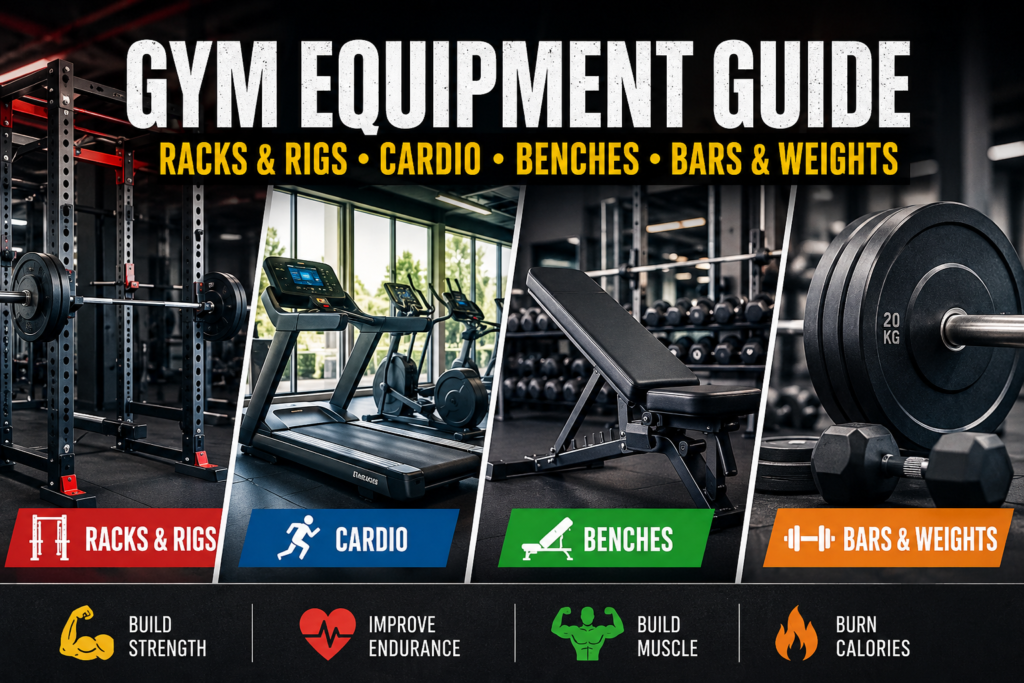

Whether you are setting up a commercial fitness center, building a home gym, or simply starting your fitness journey, choosing the right equipment is one of the most important decisions you can make. Modern gyms are built around four essential categories of equipment: Racks & Rigs, Cardio Machines, Benches, and Bars & Weights. Together, these four categories provide everything needed for strength training, muscle building, fat loss, athletic performance, and overall health.
Many beginners purchase equipment without understanding its purpose. As a result, they spend money on machines they rarely use while overlooking equipment that provides the greatest benefits. Learning how each category works helps you create an effective workout routine and maximize your results.
In this complete gym equipment guide, you’ll discover how each type of equipment works, its benefits, popular exercises, buying tips, maintenance advice, and how all four categories combine to create a complete training system.
Why These Four Equipment Categories Matter
Every successful gym, from small home setups to professional fitness clubs, includes these four categories because they cover every major aspect of fitness.
- Racks & Rigs build strength safely.
- Cardio equipment improves endurance and burns calories.
- Benches support countless upper-body exercises.
- Bars & Weights provide resistance for muscle growth.
Together they allow beginners, intermediate lifters, athletes, and professional bodybuilders to train efficiently without limitations.
Racks & Rigs – The Foundation of Strength Training
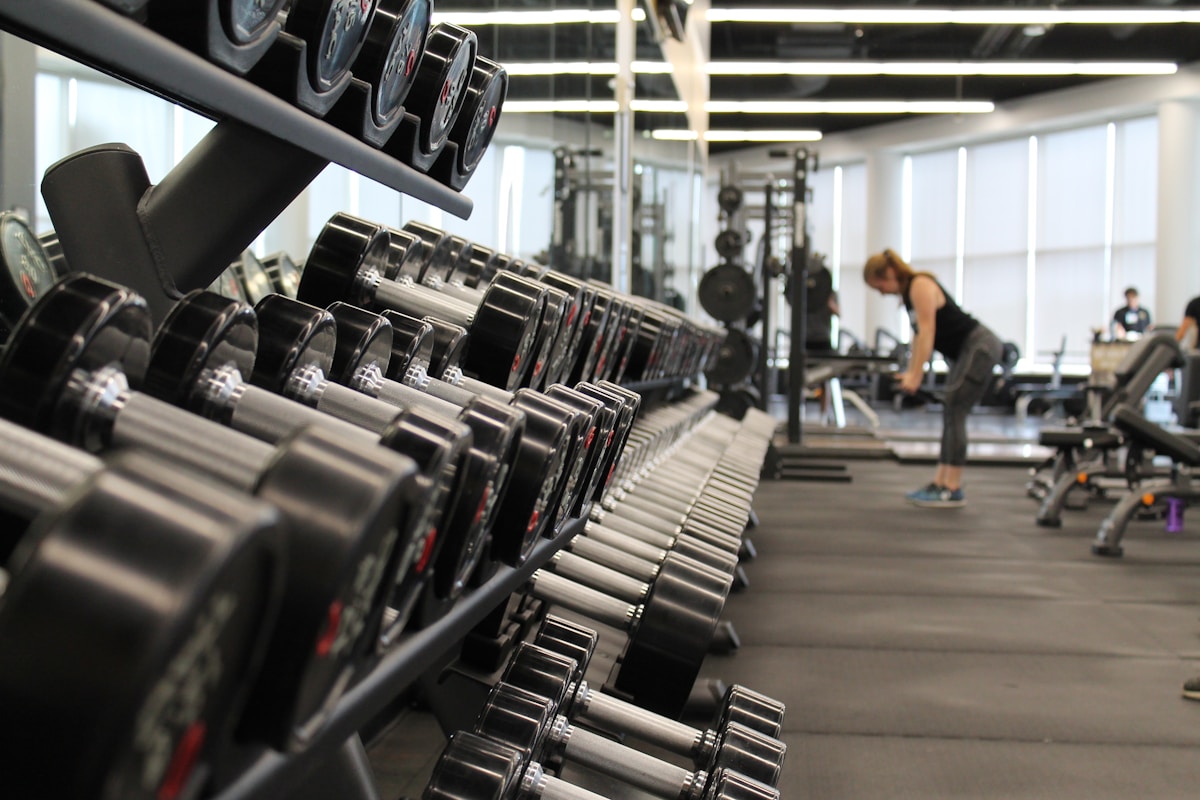
Among all gym equipment, Racks & Rigs are considered the backbone of strength training. These heavy-duty steel structures provide a safe environment for lifting barbells while allowing users to perform dozens of different exercises.
Unlike machines that isolate muscles, racks encourage compound movements that recruit multiple muscle groups simultaneously.
What Is a Rack?
A rack is a steel frame designed to hold a barbell securely. Most racks include adjustable J-hooks and safety arms that protect users during heavy lifts.
Common types include:
- Power Rack
- Squat Rack
- Half Rack
- Functional Training Rack
- Smith Machine
Power racks are especially popular because they allow heavy lifting with maximum safety.
What Is a Rig?
A rig is a larger modular training system commonly found in CrossFit gyms and commercial fitness centers. Unlike a single rack, rigs allow several people to train at once.
A rig may include:
- Pull-up bars
- Monkey bars
- Dip stations
- Suspension trainer attachments
- Rope climbing stations
- Landmine attachments
This makes rigs ideal for group training and functional fitness workouts.
Benefits of Racks & Rigs
Using racks and rigs offers numerous advantages:
- Increased lifting safety
- Supports progressive overload
- Suitable for beginners and professionals
- Allows hundreds of exercise variations
- Excellent for full-body workouts
- Improves athletic performance
- Saves space when multiple attachments are added
Best Exercises Using Racks
Some of the most effective strength exercises include:
Barbell Squats
Develops legs, glutes, and core strength.
Bench Press
Builds chest, shoulders, and triceps.
Overhead Press
Strengthens shoulders and upper body.
Pull-Ups
One of the best bodyweight exercises for back development.
Rack Pulls
Excellent for improving deadlift strength.
Barbell Lunges
Targets legs while improving balance.
Who Should Buy a Rack?
Racks are ideal for:
- Beginners
- Bodybuilders
- Powerlifters
- Athletes
- Personal trainers
- Home gym owners
Cardio Equipment – Improve Fitness & Burn Calories
Cardiovascular exercise is essential for maintaining heart health, improving endurance, and supporting fat loss. Cardio machines provide controlled, low-impact workouts suitable for people of all fitness levels.
Regular cardio training helps improve lung capacity, blood circulation, stamina, and calorie expenditure.
How Cardio Equipment Works
Cardio machines increase your heart rate through repetitive movement. As your body works harder, it burns calories while strengthening the cardiovascular system.
Many modern machines also track:
- Calories burned
- Distance
- Heart rate
- Workout time
- Speed
- Incline
- Resistance level
These metrics help users monitor progress and stay motivated.
Types of Cardio Equipment
Treadmill
The treadmill remains one of the world’s most popular cardio machines.
Benefits include:
- Walking
- Jogging
- Running
- Incline training
- Interval workouts
Perfect for:
- Weight loss
- Endurance
- Daily cardio
Exercise Bike
Stationary bikes provide excellent cardiovascular exercise with minimal impact on the knees.
Suitable for:
- Beginners
- Seniors
- Rehabilitation
- Fat loss
Elliptical Trainer
Ellipticals simulate walking while reducing stress on joints.
Advantages include:
- Full-body movement
- Joint-friendly exercise
- Low injury risk
- High calorie burn
Rowing Machine
Rowers provide one of the most complete full-body workouts available.
Muscles worked:
- Back
- Legs
- Arms
- Shoulders
- Core
Stair Climber
This machine simulates climbing stairs.
Benefits include:
- Stronger legs
- Improved endurance
- High calorie burn
Benefits of Cardio Training
Regular cardio provides many long-term health benefits:
- Better heart health
- Improved stamina
- Reduced body fat
- Better blood circulation
- Improved mental health
- Lower stress
- Increased daily energy
Benches – Essential Support for Weight Training

A quality weight bench is one of the most versatile pieces of gym equipment.
Benches provide stability during lifting exercises while allowing different training angles that target muscles more effectively.
Types of Benches
Flat Bench
Perfect for:
- Bench Press
- Dumbbell Press
- Dumbbell Rows
Incline Bench
Targets:
- Upper chest
- Front shoulders
- Upper pectorals
Decline Bench
Focuses on:
- Lower chest
- Core exercises
- Decline presses
Adjustable Bench
The most versatile option.
Allows:
- Flat position
- Incline position
- Upright position
- Decline position
Most home gyms choose adjustable benches because they replace multiple benches in one.
Benefits of Weight Benches
- Better exercise stability
- Improved lifting form
- More exercise variations
- Safer workouts
- Stronger upper body development
Popular Bench Exercises
- Flat Bench Press
- Incline Dumbbell Press
- Seated Shoulder Press
- Dumbbell Fly
- Skull Crushers
- Bulgarian Split Squat
- Chest Supported Rows
Bars & Weights – The Key to Muscle Growth

Bars and weights form the core of resistance training.
Unlike machines that follow fixed movement patterns, free weights force stabilizing muscles to work harder, leading to greater overall strength.
Types of Bars
Olympic Barbell
The standard choice for commercial gyms.
Used for:
- Squats
- Deadlifts
- Bench Press
- Olympic Lifts
EZ Curl Bar
Designed for:
- Biceps curls
- Triceps extensions
Reduces wrist strain compared to straight bars.
Trap Bar
Ideal for:
- Deadlifts
- Shrugs
- Farmer Walks
Provides a safer lifting position.
Types of Weights
Rubber Plates
Quiet and durable.
Bumper Plates
Used in Olympic lifting.
Iron Plates
Affordable and long-lasting.
Dumbbells
Available in fixed and adjustable versions.
Kettlebells
Excellent for functional training and conditioning.
Benefits of Free Weights
Free weights help develop:
- Muscle size
- Strength
- Coordination
- Balance
- Core stability
- Athletic performance
They also encourage natural movement patterns that translate well into everyday activities and sports.
Best Exercises Using Bars & Weights
Some of the most effective compound exercises include:
- Deadlift
- Back Squat
- Front Squat
- Bench Press
- Overhead Press
- Barbell Row
- Romanian Deadlift
- Bent Over Row
These exercises train multiple muscle groups simultaneously, making workouts more efficient.
How These Four Categories Work Together
The best workout programs combine all four categories rather than relying on just one type of equipment.
A typical workout might look like this:
Step 1 – Warm Up
Spend 10–15 minutes on a treadmill, bike, or rowing machine to increase blood flow and prepare your muscles.
Step 2 – Strength Training
Use a rack to perform compound lifts such as squats or overhead presses.
Step 3 – Bench Exercises
Move to an adjustable bench for chest presses, shoulder presses, and dumbbell exercises.
Step 4 – Free Weight Training
Finish with barbells, dumbbells, or kettlebells for accessory work and progressive overload.
Step 5 – Cardio Cool Down
End the session with light cardio to improve recovery and cardiovascular fitness.
Choosing the Right Equipment
When buying gym equipment, consider:
- Available space
- Budget
- Fitness goals
- Weight capacity
- Build quality
- Warranty
- Brand reputation
- Future expansion
Investing in durable equipment saves money over time and ensures a safer training experience.
Home Gym Setup Recommendation
A complete beginner home gym should include:
- Adjustable Bench
- Power Rack
- Olympic Barbell
- Weight Plates
- Adjustable Dumbbells
- Pull-Up Bar
- Exercise Bike or Treadmill
- Rubber Flooring
This setup supports nearly every major strength and cardio exercise without requiring multiple machines.
Maintenance Tips
Proper maintenance extends equipment life and improves safety.
- Clean equipment after every workout.
- Tighten bolts regularly.
- Lubricate moving parts when needed.
- Inspect cables and attachments.
- Store weights properly.
- Keep equipment dry to prevent rust.
- Replace damaged parts immediately.
Routine maintenance keeps your gym looking professional and functioning efficiently.
Frequently Asked Questions
What is the difference between a rack and a rig?
A rack is designed for individual barbell exercises, while a rig is a larger modular system that supports multiple users and functional training attachments.
Is cardio necessary if I want to build muscle?
Yes. Moderate cardio improves heart health, endurance, and recovery without reducing muscle gains when balanced with proper nutrition and strength training.
Which bench is best for a home gym?
An adjustable bench is the best choice because it allows flat, incline, and upright positions, making it suitable for a wide range of exercises.
Why should beginners use free weights?
Free weights improve coordination, activate stabilizing muscles, and promote balanced strength development, making them highly effective for long-term progress.
How often should I use cardio equipment?
For general health, aim for 150 minutes of moderate-intensity cardio per week. This can be adjusted depending on your fitness goals.
Conclusion
Building an effective gym starts with understanding the role of Racks & Rigs, Cardio equipment, Benches, and Bars & Weights. Each category serves a unique purpose, but together they create a complete training system that supports strength, muscle growth, fat loss, endurance, and overall fitness.
Whether you are creating a home gym, upgrading a commercial facility, or beginning your fitness journey, investing in these four essential categories ensures you have the tools needed to achieve long-term success. By combining smart equipment choices with consistent training and proper nutrition, you can build a gym environment that delivers lasting results for every fitness level.