

Illustrative image. Review image licensing and availability before publishing.
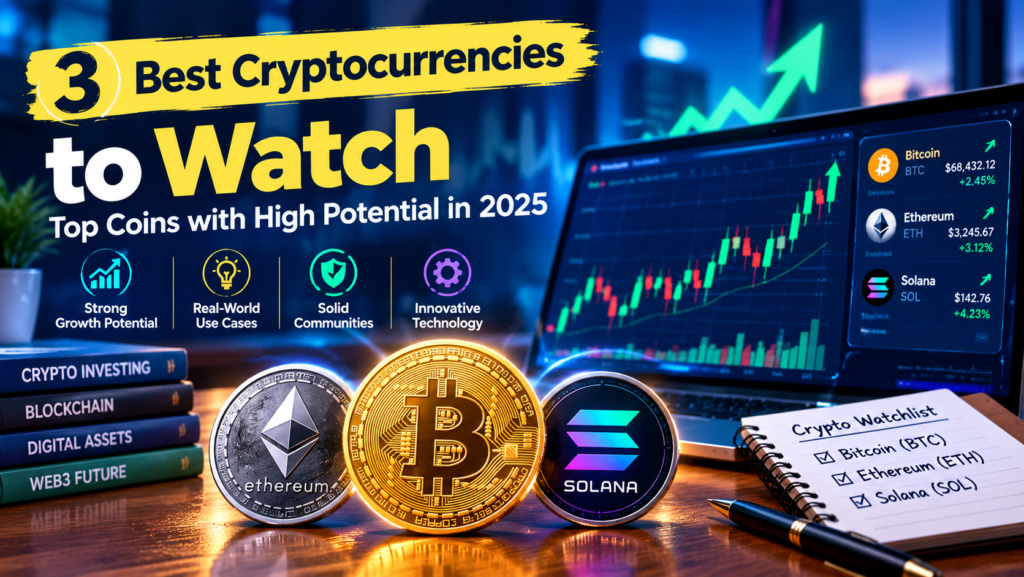
People searching for the best cryptocurrencies in 2026 should begin with a research framework rather than a promise of returns. Crypto prices are volatile, and no list can reliably predict which asset will perform best. The examples below are well-known categories and projects to study, not buy recommendations or a ranking of expected performance.
Bitcoin (BTC): Digital Scarcity
Bitcoin is the original widely adopted cryptocurrency. Its supply schedule and decentralized transaction network are central to its design. Research its volatility, network fees, custody options, and the way market sentiment can influence price. Bitcoin does not produce company earnings or guarantee purchasing-power protection.
Ethereum (ETH): Smart Contracts
Ethereum supports smart contracts and a broad ecosystem of decentralized applications. Ether is used for network fees and other functions in that ecosystem. Important research topics include network activity, scaling, competition, technical upgrades, and the risks of applications built on top of the network.
Stablecoins: Price-Tracking Tokens
Stablecoins are designed to track an asset, often a fiat currency. They can be useful in some blockchain transactions, but their stability depends on their structure, reserves, redemption arrangements, and issuer. A stablecoin can lose its peg or become difficult to redeem, so it should not automatically be treated as risk-free cash.
Other Projects: Evaluate the Use Case
Other networks focus on payments, decentralized finance, gaming, data services, or interoperability. For each project, ask whether the technology is being used, whether the token is actually needed, how new tokens enter circulation, and whether control is concentrated among a small group. Read security audits carefully; an audit does not eliminate vulnerabilities.
A Checklist for Comparing Cryptocurrencies
- Purpose: What problem does the project solve?
- Adoption: Is there verifiable, sustained use?
- Token economics: What are the supply and unlock schedules?
- Security: What is the history of incidents and responses?
- Liquidity: Can the asset be bought or sold without excessive costs?
- Governance: Who can change the rules?
- Regulation: Is the asset or platform permitted where you live?
Final Thoughts
The best asset for one person may be unsuitable for another. Avoid decisions based only on short-term charts, viral posts, or claims that a coin is certain to rise. Research carefully, diversify where appropriate, and never invest money you cannot afford to lose. This article is educational, not financial advice.
Expanded Article
This longer version provides additional context, practical steps, and common questions for readers who are new to the topic. Cryptocurrency markets and technologies involve substantial uncertainty; use this material for education rather than as personalised investment advice.
How to build a watchlist
Treat a watchlist as a research tool, not a list of guaranteed winners. Compare projects by use case, adoption, liquidity, token supply, development activity, security, governance, and regulatory exposure. A useful product does not automatically mean its token is undervalued or likely to rise.
Compare different categories
Bitcoin is commonly studied as a decentralised digital asset; smart-contract platforms support applications; stablecoins aim to track reference assets; and infrastructure projects may provide data or interoperability. Each category has distinct risks. Research how a token captures value, if it does at all, rather than assuming that product usage always benefits token holders.
Practical considerations
Before taking action, define your goal and understand the trade-offs. Cryptocurrency products differ in design, reliability, liquidity, fees, and legal treatment. A popular project is not automatically suitable for every person, and past performance does not establish future results. Read original documentation and compare claims against independent evidence instead of relying only on promotional posts.
Security and personal responsibility
Use unique passwords, multi-factor authentication, and official websites or applications. Never share a private key or recovery phrase with anyone. Be wary of urgent messages, guaranteed returns, and requests to send funds to unlock a prize or recover an account. Transactions on public blockchains are often irreversible, so verify addresses, networks, and fees before confirming.
Costs, taxes, and records
Costs can include platform commissions, spreads, withdrawal fees, and network transaction fees. Keep records of purchases, sales, transfers, and fees, and check the tax rules that apply in your jurisdiction. Rules and platform availability can differ by country and change over time. For complex financial or tax decisions, consult a qualified professional who understands your circumstances.
A checklist before deciding
Ask what problem the product solves, who uses it, how it is secured, how it is governed, and what could make it fail. Look for transparent documentation, realistic claims, independent security reviews, and a clear explanation of the risks. If you cannot explain the product in plain language, take more time to learn before committing money.
Frequently asked questions
Can research eliminate risk? No. Research can help identify warning signs, but it cannot eliminate market volatility, software failures, fraud, regulation changes, or platform problems. Is crypto suitable for everyone? No. It is possible to learn about blockchain without buying digital assets. The right decision depends on your financial position, risk tolerance, and goals.
Conclusion
The most useful approach is to learn gradually, keep expectations realistic, and avoid decisions made under pressure. Focus on understanding the technology and protecting yourself rather than chasing short-term price predictions. This article is for educational purposes only and is not personalised financial, investment, or tax advice.