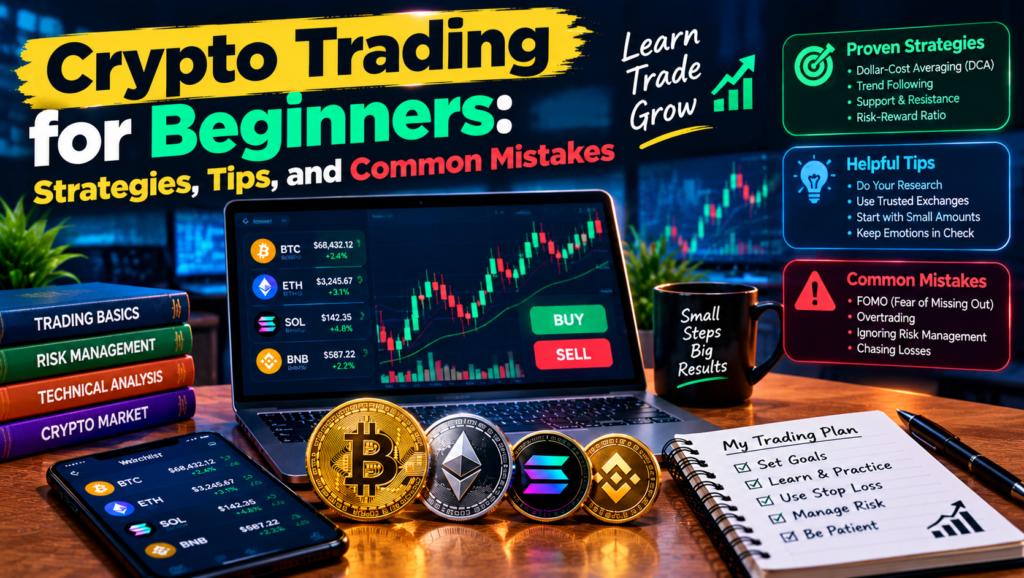


Illustrative image. Review image licensing and availability before publishing.
Crypto trading means buying and selling digital assets in an attempt to benefit from price movements. Markets operate around the clock on many platforms and can be extremely volatile. Beginners should understand the mechanics and risks before placing a trade; no strategy reliably guarantees profit.
Understand the Main Order Types
A market order generally aims to execute promptly at available prices, but the final price can differ from the displayed quote. A limit order sets a maximum purchase price or minimum sale price, but it may not execute. Learn how your platform handles fees, partial fills, and slippage before using either order type.
Spot Trading vs. Leverage
Spot trading involves buying or selling the asset itself through a platform. Margin and derivatives can add leverage, which magnifies both gains and losses and may lead to liquidation. Leverage is especially risky for inexperienced traders and can cause losses very quickly.
Create a Trading Plan
A plan should define why you are trading, what information supports a decision, how much risk you will take, and when you will stop. Avoid making decisions solely from social-media posts or sudden price spikes. A written plan can reduce impulsive reactions, although it cannot predict the market.
Risk Management Basics
- Never trade with money needed for essential expenses.
- Set a maximum loss you can tolerate before entering a trade.
- Avoid concentrating all funds in one asset or one position.
- Understand fees, spreads, slippage, and funding costs.
- Keep account security and withdrawal controls enabled.
- Maintain records for review and tax reporting where required.
Common Beginner Mistakes
Common mistakes include chasing a coin after a large rally, panic-selling without a plan, trading too frequently, believing guaranteed-profit claims, and increasing risk to recover a loss. Past results and backtests may not reflect real market conditions. Paper trading can help you learn platform mechanics without risking real funds, but it does not reproduce every emotional or liquidity challenge.
How to Keep Learning
Study market structure, order books, asset fundamentals, and security. Use reputable educational sources and verify claims independently. If a strategy is difficult to explain or depends on secrecy, urgency, or unrealistic returns, treat it with caution.
Conclusion
Crypto trading is speculative and may not suit every person. Focus on learning, risk controls, and realistic expectations rather than quick profits. This article is for educational purposes only, not financial advice.
Expanded Article
This longer version provides additional context, practical steps, and common questions for readers who are new to the topic. Cryptocurrency markets and technologies involve substantial uncertainty; use this material for education rather than as personalised investment advice.
Orders, liquidity, and slippage
Market orders prioritise execution but may fill at different prices in a fast or thin market. Limit orders specify a price but may not execute. The bid-ask spread, slippage, trading fees, and withdrawal charges can all affect results. A strategy should be evaluated after costs rather than by looking only at the price chart.
Risk controls and psychology
Decide in advance how much you can lose on one trade and when your original idea is no longer valid. Leverage magnifies gains and losses and can cause liquidation. Fear of missing out, panic selling, and revenge trading often lead to impulsive choices. Keep a journal, review decisions, and remember that not trading is also an option.
Practical considerations
Before taking action, define your goal and understand the trade-offs. Cryptocurrency products differ in design, reliability, liquidity, fees, and legal treatment. A popular project is not automatically suitable for every person, and past performance does not establish future results. Read original documentation and compare claims against independent evidence instead of relying only on promotional posts.
Security and personal responsibility
Use unique passwords, multi-factor authentication, and official websites or applications. Never share a private key or recovery phrase with anyone. Be wary of urgent messages, guaranteed returns, and requests to send funds to unlock a prize or recover an account. Transactions on public blockchains are often irreversible, so verify addresses, networks, and fees before confirming.
Costs, taxes, and records
Costs can include platform commissions, spreads, withdrawal fees, and network transaction fees. Keep records of purchases, sales, transfers, and fees, and check the tax rules that apply in your jurisdiction. Rules and platform availability can differ by country and change over time. For complex financial or tax decisions, consult a qualified professional who understands your circumstances.
A checklist before deciding
Ask what problem the product solves, who uses it, how it is secured, how it is governed, and what could make it fail. Look for transparent documentation, realistic claims, independent security reviews, and a clear explanation of the risks. If you cannot explain the product in plain language, take more time to learn before committing money.
Frequently asked questions
Can research eliminate risk? No. Research can help identify warning signs, but it cannot eliminate market volatility, software failures, fraud, regulation changes, or platform problems. Is crypto suitable for everyone? No. It is possible to learn about blockchain without buying digital assets. The right decision depends on your financial position, risk tolerance, and goals.
Conclusion
The most useful approach is to learn gradually, keep expectations realistic, and avoid decisions made under pressure. Focus on understanding the technology and protecting yourself rather than chasing short-term price predictions. This article is for educational purposes only and is not personalised financial, investment, or tax advice.